
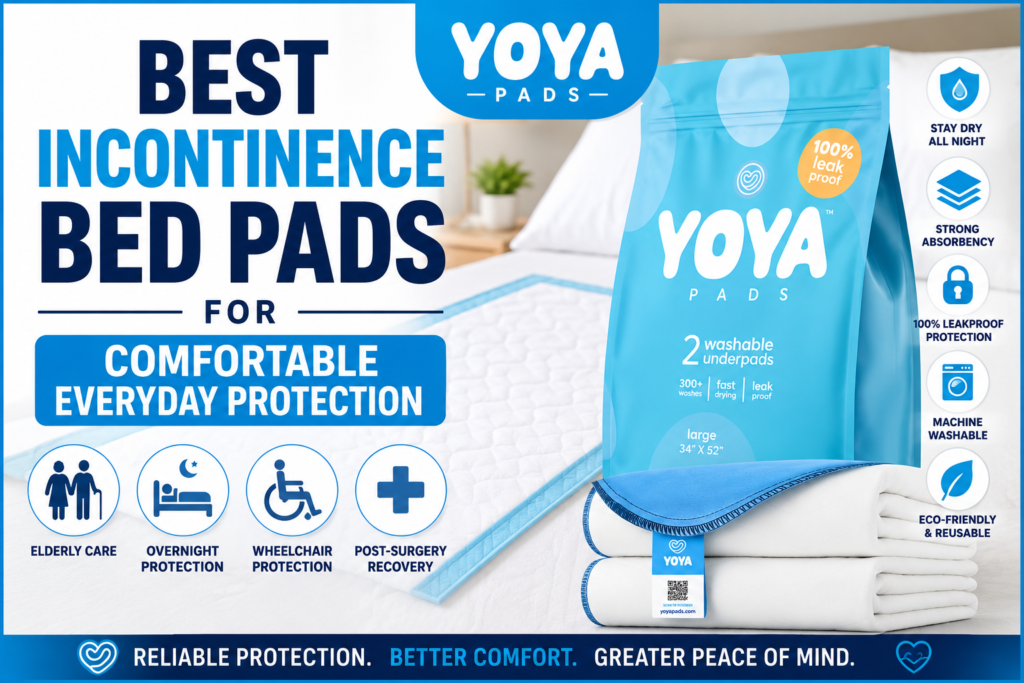
Incontinence is one of those topics most families don’t discuss openly — but millions of households quietly manage it every night. Whether you’re caring for an aging parent, supporting a partner through recovery, or just trying to make a difficult situation a little easier, the daily reality is the same: you need something dependable that protects the bed, simplifies the cleanup, and keeps the person being cared for comfortable.
That’s exactly what a good incontinence bed pad does. Quietly, reliably, every night.
Here’s what makes the right one worth buying — and how modern washable bed pads have made caregiving meaningfully easier.
Why a Good Incontinence Bed Pad Matters
For caregivers, incontinence isn’t just about the moisture itself — it’s about everything that comes with it. Damaged mattresses. Stripped beds at 3 a.m. Endless laundry. And, most importantly, the dignity and comfort of the person you’re caring for.
A quality incontinence bed pad handles all of that quietly in the background. It absorbs liquid before it reaches the mattress, keeps the sleeping surface dry and breathable, and gets washed and reused the next day — no daily disposable runs, no awkwardness, no mattress replacement bills.
That’s why washable bed pads have become essential across so many caregiving situations:
One pad, dozens of real-world problems handled — that’s the appeal.
How Quality Bed Pads Are Actually Built
Not all “waterproof” bed pads are engineered for daily use. A well-made washable pad usually has four working parts — and the difference between a great pad and a bad one comes down to how well each layer does its job.
Absorbent Top Layer
Pulls moisture away from the surface fast, so the person sleeping on it isn’t left lying in wetness. This is the layer that determines comfort.
Leakproof Waterproof Backing
The real workhorse — stops any liquid from passing through to your mattress, sofa, or wheelchair cushion underneath. Without it, the rest of the pad is just decoration.
Non-Slip Grip
Keeps the pad from sliding around during tossing, turning, and patient transfers. A pad that bunches up overnight isn’t doing its job.
Durable Construction
The difference between a pad that lasts 50 washes and one that lasts 500. Reinforced stitching and quality materials are what separate a one-season pad from a multi-year one.
What to Look for Before You Buy
When you’re comparing options, five things actually matter:
1 Absorbency
How quickly and how much liquid the pad can hold. Cheap pads stay damp on the surface; good ones lock moisture into the core and keep the top dry.
2 Waterproof Backing
Test it: water on top should never come through underneath. If it does, the pad has failed at its main job.
3 Comfort
Soft, breathable fabric matters more than you’d think — especially for overnight use. A noisy, plastic-feeling pad disrupts sleep for everyone in the room.
4 Machine Washability
Look for pads rated for hundreds of washes, not just a few. Cheap pads lose absorbency fast and turn stiff after a couple of cycles.
5 Size
Bigger is usually better for active sleepers. Match the pad size to the actual bed or chair you’re protecting — don’t just go with the cheapest option.
Reusable vs Disposable: The Short Version
Disposables have their place — travel, hospitals, emergency situations. But for daily home use, washable bed pads almost always come out ahead.
Washable Bed Pads Daily Use
- Reusable hundreds of times
- Softer, more comfortable overnight
- Lower long-term cost
- Less landfill waste
Disposable Bed Pads Travel
- Convenient for trips
- Quick to swap and toss
- No laundry required
- Useful as emergency backup
For caregiving at home — where pads get used every single night — washable wins on cost, comfort, and sustainability over the long haul.
The Bottom Line
Incontinence bed pads do something quietly remarkable: they protect what’s expensive (mattresses, bedding, furniture), simplify what’s exhausting (cleanup, laundry, broken sleep), and preserve what matters most — the dignity and comfort of the person you’re caring for.
For most families managing incontinence at home, a quality washable bed pad isn’t really optional. It’s one of the smallest investments you can make that genuinely improves daily life — for both the caregiver and the person being cared for.
