
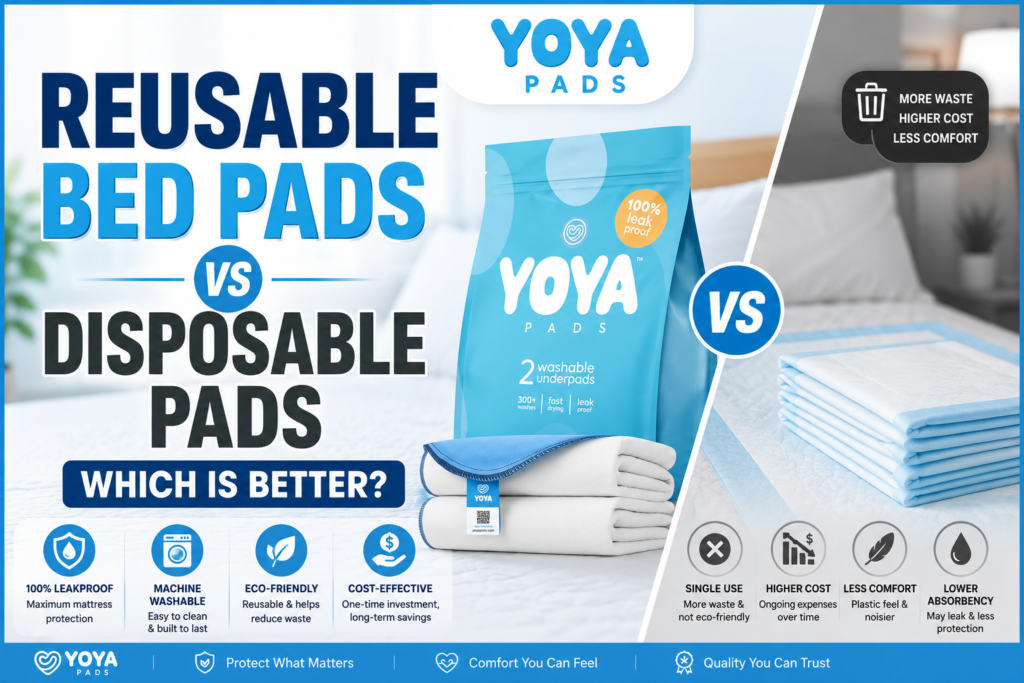
Reusable Bed Pads vs Disposable Pads: Which One Actually Wins?
If you’ve ever done the math on disposable bed pads — a fresh pack every week, month after month — you already know where this is heading. Reusable bed pads have quietly become the go-to choice for families dealing with bedwetting, elderly care, post-surgery recovery, and everyday mattress protection. And not just because they’re better for the planet.
They simply work better day to day. Softer feel, stronger absorbency, and a one-time purchase that lasts hundreds of washes.
Here’s how reusable and disposable bed pads really stack up — and what to look for before you buy.
Why So Many Families Are Switching to Reusable Pads
Reusable waterproof bed pads have moved from “nursing-home product” to mainstream essential — and the reasons are pretty straightforward. They’re showing up everywhere from kids’ bedrooms to senior care setups:
A quality washable bed pad can survive hundreds of laundry cycles without losing its absorbency or waterproof grip — something disposables can’t begin to match.
What Reusable Bed Pads Get Right
1 Real Cost Savings (Not Marketing Math)
Disposables look cheap per pack — until you total a year of them. Most families recover the cost of a reusable pad within weeks and then save steadily after that. Buy once, wash often.
2 Less Waste, Less Guilt
Every disposable pad goes straight to landfill. A single washable pad replaces hundreds of them, which is why eco-conscious households are making the switch.
3 Genuinely More Comfortable
Disposable pads feel like sleeping on plastic — because you basically are. Reusable bed pads use soft, breathable top layers that feel like normal bedding, which matters a lot for overnight use.
4 Serious Absorbency
Modern washable pads use multi-layer construction that locks moisture in quickly, keeps the surface dry, and stops leaks from reaching the mattress underneath.
When Disposable Pads Still Make Sense
To be fair, disposables aren’t useless. They earn their place in specific situations:
For one-off use, disposables are convenient. For everyday protection at home, the cost and waste add up fast.
What to Look for in a Quality Washable Bed Pad
Not all reusable pads are built the same. Before you buy, check for these:
Strong Waterproof Backing
A reliable waterproof layer is what actually keeps your mattress safe. Without it, you’re just buying a thick towel.
Wash-Tested Durability
Look for pads built to hold their absorbency and waterproofing through hundreds of machine washes — not just the first few.
Soft, Breathable Top Layer
Comfort matters most overnight. Soft fabric makes a real difference for elderly users and anyone with sensitive skin.
Multi-Layer Absorbency
Multiple absorbent layers pull moisture in fast and keep the top surface dry — the real test of a good pad.
Non-Slip Surface
A good pad stays put through tossing, turning, and transfers. A pad that slips defeats the whole purpose.
The Bottom Line
For everyday mattress protection, elderly care, or bedwetting support, reusable bed pads are simply the smarter long-term choice. Better comfort, stronger absorbency, lower cost over time, and far less waste — there’s no real contest.
Disposables have their place for travel and emergencies. But for your home, your bed, and your peace of mind, washable waterproof bed pads win pretty much every round.
